

Unilever is exploring selling its food division to McCormick, Nestlé is reducing its ice cream business, and Danone is acquiring Huel. The real shift is not only in what is sold, but in who is seen as credible to sell it.
The packaged food industry is facing a turning point. High prices, a shift toward cheaper private labels, increased scrutiny of ultra-processed foods, and the impact of weight-control drugs (GLP-1) are forcing large companies to reconfigure their portfolios.
A recent analysis by The Economist describes this situation as a deterioration going “from bad to worse.” Between 2021 and 2024, major brands in the U.S. raised prices by an additional 11% above inflation. While this temporarily protected margins, it triggered a backlash: consumers are shifting to cheaper options from retailers like Costco and Aldi (or their local equivalents). Global searches related to “ultra-processed foods” have increased thirtyfold since 2022.
An EY study estimates that drugs like Wegovy and Zepbound could reduce snack sales in the U.S. by up to $12 billion over the next decade, as they change not only how much people eat, but also preferences toward more filling, protein-rich options.
Strategic moves by multinationals
These pressures are already translating into concrete actions:
• Unilever announced on March 20, 2026, that it is exploring the sale of its food division—which includes Hellmann’s, Knorr, and Marmite—to McCormick. After divesting its ice cream business last year, the British company aims to focus on personal care and home cleaning.
• Nestlé continues to divest from its ice cream business to concentrate on nutrition and categories more aligned with healthy trends.
• Danone announced on March 23, 2026, the acquisition of Huel, a complete-meal and protein replacement brand, for around €1 billion.
The pattern is clear: traditional categories of indulgence or ultra-processed convenience are losing structural appeal, while those offering greater control over ingredients, protein, or explicit nutritional benefits are gaining ground.
Beyond purpose: credibility as the new filter
Beyond portfolio adjustments and traditional marketing strategies, the deepest change lies in consumer criteria: people are not only buying differently—they are filtering differently.
Reformulating a product or launching “healthy” lines is no longer enough. Acceptance increasingly depends on whether it makes sense for a given brand to deliver that innovation. A multinational with a strong history in ultra-processed foods naturally generates skepticism when positioning itself as healthy.
This reshapes the role of corporate purpose. Parallel initiatives—such as campaigns or sustainability programs—are becoming insufficient. The main point of contact with society now lies in the product itself: its formulation, ingredient transparency, and real impact on public health.
In Mexico, where front-of-pack labeling has been in place for years, the focus is on minimizing warning labels and leveraging credibility in ingredients perceived as more natural. In this context, local or regional brands with a reputation for traditional ingredients or freshness may have a natural advantage over global giants.
From David and Goliath
The real change in the food industry lies not only in what is sold, but in who is seen as credible to sell it in each region.
Large brands know this and are adapting their moves: divesting from vulnerable categories, investing in functional nutrition, and calibrating reformulations and messaging according to local contexts.
Companies whose product history grants them “social license” to compete in this new paradigm will have certain advantages. Those that treat purpose merely as a communication exercise will face greater resistance.
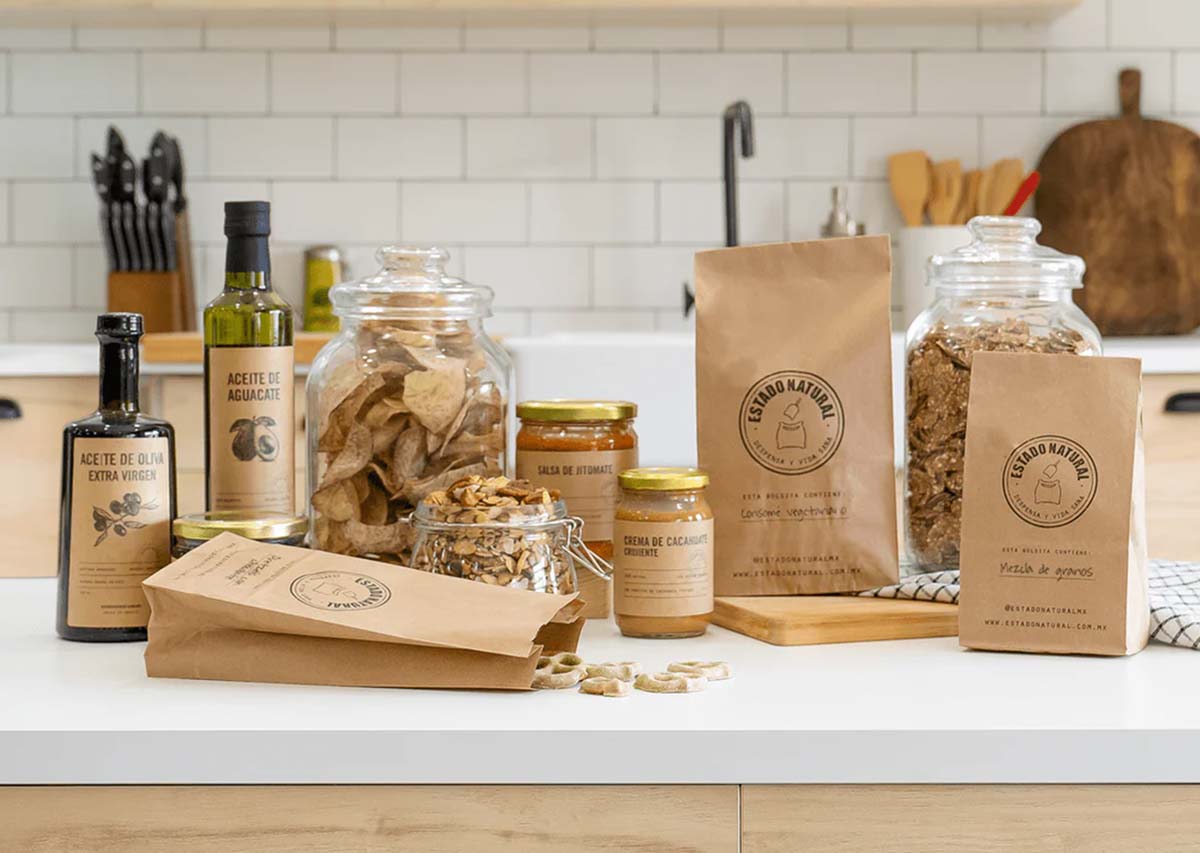
In Mexico, Estado Natural could be a good example of this. The brand first opened its doors in October 2017. It was founded with the purpose of bringing healthier and more sustainable options to the market. In fact, its products are sold without packaging, offered in bulk. What began as a single store has grown into dozens, clearly driven by market acceptance and the social license it has earned.
The portfolio is shifting at a global level. Credibility—along with regional adaptation—becomes the most valuable asset.
Source: Main article “Big food’s troubles go from bad to worse,” The Economist (March 2026), and recent corporate announcements from Unilever, Nestlé, and Danone.