

By Edgar López
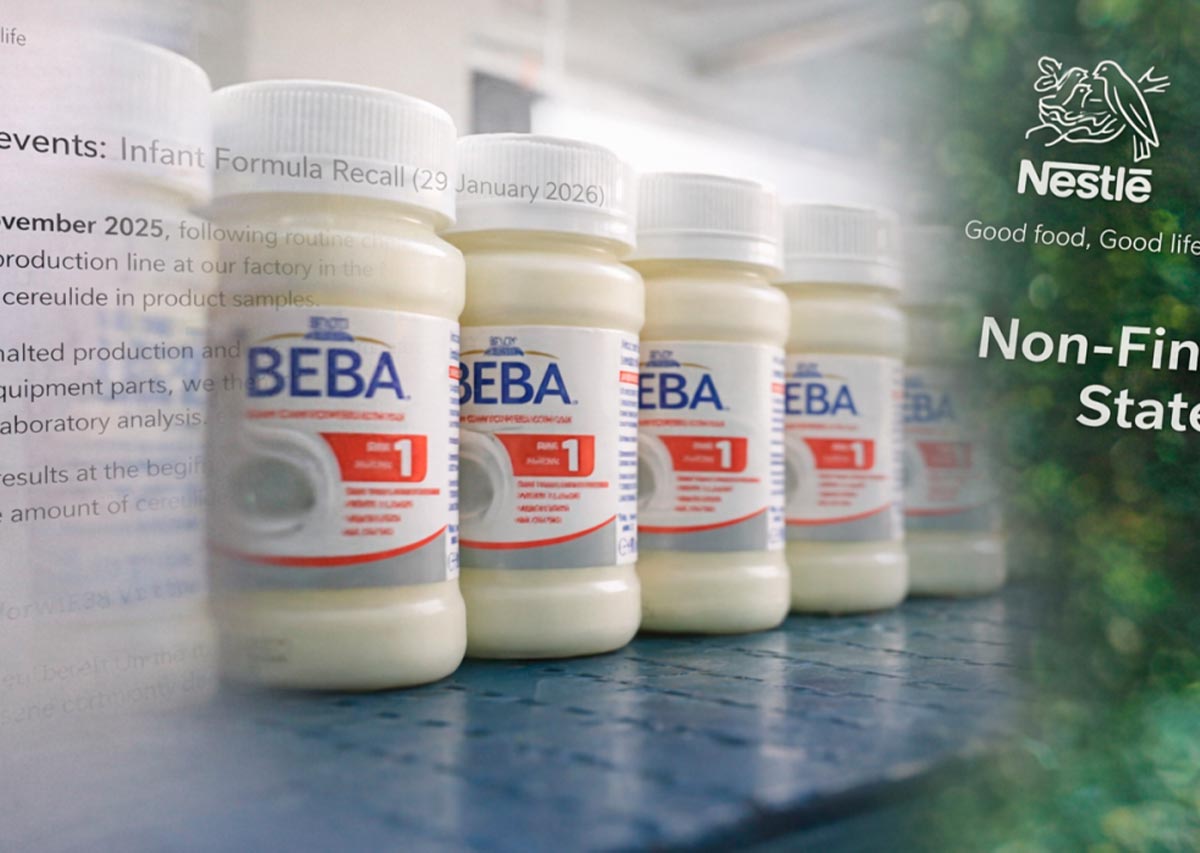
In January 2026, Nestlé recalled several batches of infant formula (brands SMA, BEBA, NAN, and others) in more than 60 countries due to possible contamination with cereulide, a toxin produced by the bacterium Bacillus cereus. The source was traced to an ingredient supplied by a third-party provider. Thousands of families had already purchased and were using the products when the alert was issued.
The episode was not entirely unforeseen. In its 2025 Non-Financial Statement, the company explicitly acknowledges the general risk that unsafe products may reach the end consumer.
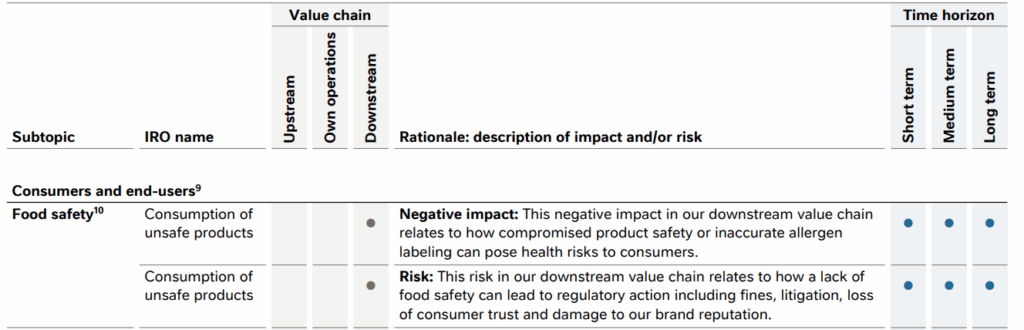
In its materiality matrix (pages 18 and 25), Nestlé categorized the impact “Consumption of unsafe products” as one of its 39 material negative impacts, placing it in the downstream phase (final consumption). The document states clearly:
“This negative impact in our downstream value chain relates to how compromised product safety or inaccurate allergen labeling can pose health risks to consumers.”
Non-Financial Statement 2025 – Nestlé
Nestlé divides its value chain into three distinct levels: upstream (suppliers), own operations, and downstream (final consumption). Although the technical origin of the issue was upstream, the capacity for control and decision-making—and therefore operational responsibility—lies within the company’s own operations: supplier approval, final quality controls, and the decision to launch the product under its brand. This is where the risk could have been contained before reaching the consumer.
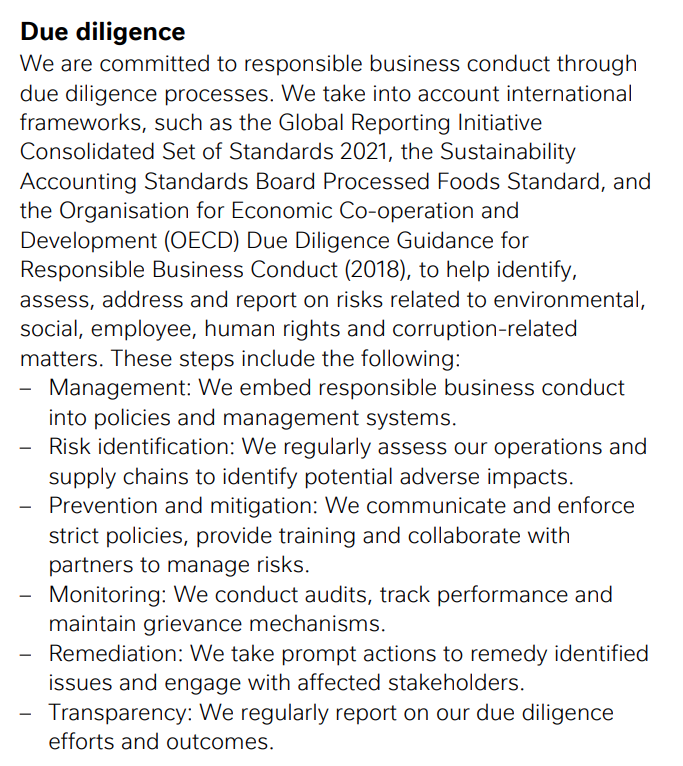
The report applies the same framework to all its impacts: identify, prevent, monitor, and remediate. This is, essentially, its due diligence model. Nestlé states that it follows OECD guidelines and has specific Human Rights and Environmental Due Diligence (HREDD) processes in place. It does not promise to eliminate all risks at their source, but rather to manage them throughout the value chain.
Non-Financial Statement 2025 – Nestlé
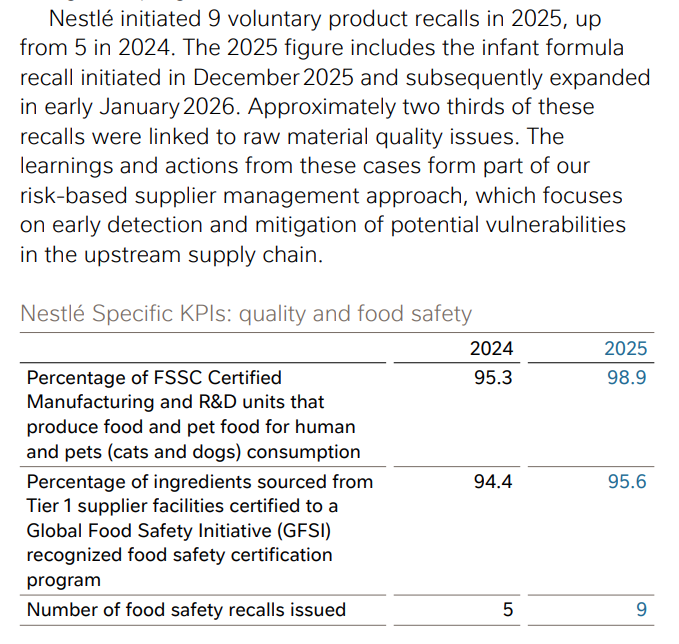
The recall of infant formula illustrates precisely how this model works in practice. The downstream risk had already been documented, yet it still materialized. Based on this case, it is reasonable to assume that the other negative impacts Nestlé acknowledges—deforestation, water pollution, biodiversity loss, risks of child labor, or insufficient wages—are managed under the same logic: they are identified, mapped, disclosed, and managed, but not always fully prevented.
Non-Financial Statement 2025 – Nestlé
The company also reported measurable progress in 2025: a net 24.52% reduction in greenhouse gas emissions since 2018, 28% less use of virgin plastic, 87.5% of packaging designed for recycling, and 27.6% of key ingredients sourced under regenerative agriculture practices.
The value of the 2025 Non-Financial Statement lies not only in what it promises, but in what it helps us understand. Nestlé had identified the general risk. Its system worked to detect it and withdraw the product. But the case raises a more important question: to what extent is managing risks sufficient when it comes to products already in consumers’ hands?
Moreover, this type of episode pushes us to go a step further in interpreting the model itself: should some of these impact categories—even if they materialize downstream—be reconsidered as part of own operations responsibility, given the level of control the company exerts over the final product?
This case is not used to sensationalize, but to better understand the responsibility model of a company of this scale. It reveals how complex it is to uphold promises of safety, responsibility, and well-being when products are already in consumers’ hands.
Sustainability reports like this are valuable precisely because they show—in greater detail—how large companies identify, categorize, and address their material issues. They do not hide risks; they publish them.
The real test lies in how that transparency translates into concrete results—and whether companies are willing not only to manage the impacts they identify, but also to assume—and, if necessary, redefine—those that depend directly on their own decisions.

Edgar López Pimentel is currently a Director at Expok, where he exercises his leadership every day with a strong passion for social responsibility and sustainable development. His work has significantly contributed to positioning leading companies in the field of corporate social responsibility.
His academic background, enriched by executive education programs in Senior Management at IPADE Business School and IE Business School, as well as a master’s degree in Corporate Social Responsibility from Universidad Anáhuac México Norte, supports his leadership.